 vs
vs
Lemlist vs Woodpecker (2026): Per-Seat Multichannel vs Prospect-Metered Simplicity
Lemlist puts its per-seat fee toward multichannel sequence depth. Woodpecker puts its per-prospect meter toward a tightly focused email sequencer. Two different shapes of outbound, each right for a different operation.

The verdict
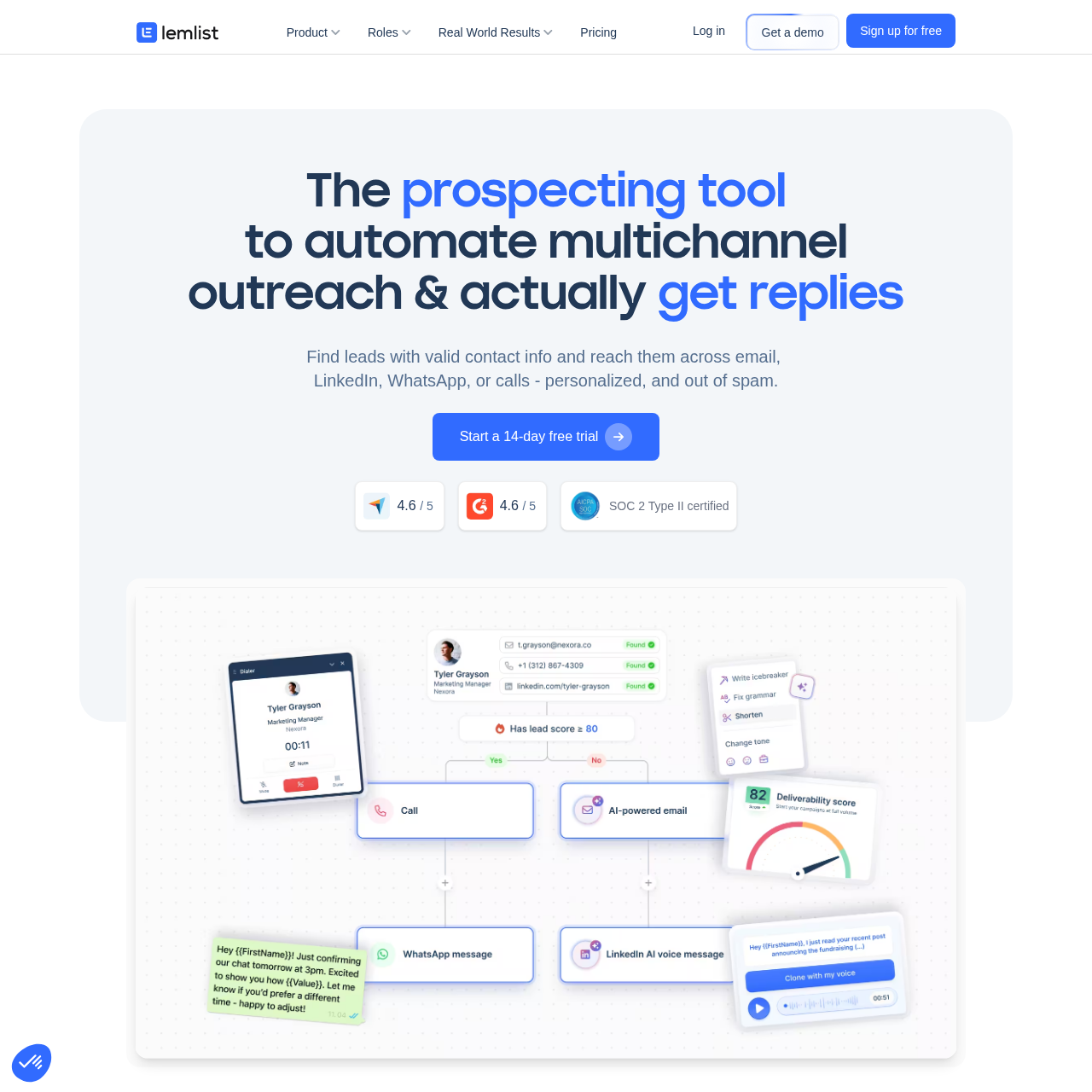
Lemlist and Woodpecker price two entirely different outbound philosophies. Lemlist meters per seat ($79-$109 a month) and pours that fee into multichannel capability: LinkedIn automation, WhatsApp messaging, AI personalization for creative sequences. The seat fee assumes every operator runs feature-rich campaigns.
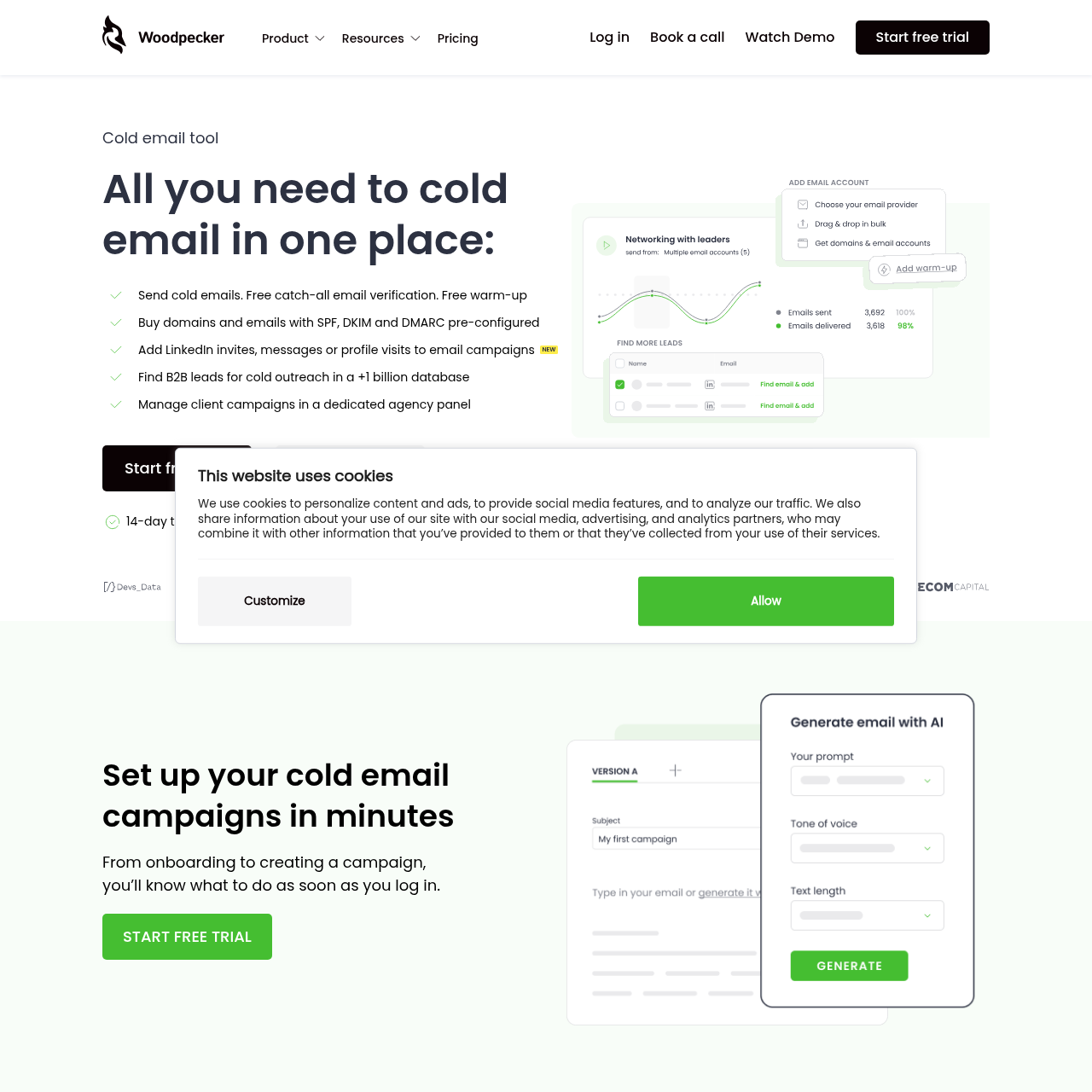
Woodpecker meters per contacted prospect ($29 for 500, scaling upward) and pours that fee into deep email sequencing: conditional logic, manual task steps, A/B testing, Bounce Shield verification. The prospect meter assumes you work the same list with many touches across a billing cycle. A solo founder running narrow-list ABM outbound pays $29 on Woodpecker or $79 on Lemlist Email Pro, both work, but Woodpecker wins on price if multichannel isn't part of the plan.
A 5-person team doing multichannel pays $545 on Lemlist Multichannel Expert against a Woodpecker bill driven by total prospects instead (often $50-$200 depending on combined count). The choice is whether your outbound philosophy is multichannel-per-operator (Lemlist) or deep-sequence-per-prospect (Woodpecker).

Where it leads
Lemlist
- Multichannel coverage across email, LinkedIn, WhatsApp, and calling
- A 600M+ database with enrichment built in
- AI personalization for images and landing pages

Where it leads
Woodpecker
- Entry pricing starts low at $29/mo
- A simple tool with a tight focus on email
- Agency panel built in
 SendboxThe third option
Lemlist scales its cost with headcount; Woodpecker scales its cost with the size of the prospect cohort. Sendbox runs flat workspace pricing with dedicated IPs that ignores both axes entirely, add operators or prospects without moving the bill, and get IP isolation that neither alternative ships at any tier.
On this page· 1/9
Feature by feature
Lemlist vs Woodpecker: Feature-by-Feature
Toggle Sendbox in or out, filter by category, or keep only the rows where the tools differ.
| Feature | Lemlist | Woodpecker | Sendbox |
|---|---|---|---|
| Infrastructure | |||
| Dedicated IPs | Lemlist No No dedicated IP option exists | Woodpecker No No dedicated IP option exists | Sendbox Every plan Dedicated IPs are included on every plan tier, not sold separately |
| Email Warmup | Lemlist lemwarm included lemwarm ships built in | Woodpecker Included Warmup and reputation recovery both included | Sendbox Unlimited, AI-powered AI-driven warmup engineered to slip past spam-detection filters |
| Email Validation | Lemlist Built-in Address verification is included | Woodpecker Built-in Address verification is included | Sendbox Built-in, every plan Verifies deliverability across 10+ provider integrations, with Enrich.so bundled in or bring your own API key |
| Pricing | |||
| Pricing Model | Lemlist Per-user Runs $79-$109 per user each month | Woodpecker Flat rate Starts at $29 with no per-seat charges | Sendbox Flat rate Flat monthly pricing with no per-seat charges |
| Starting Price | Lemlist $79/user/mo Email Pro tier, includes 3 sending accounts | Woodpecker $29/mo The entry tier with the core feature set included | Sendbox Flat-rate plans Essential tier: 75,000 emails and 30,000 leads a month, dedicated IPs included |
| Sending | |||
| Email Accounts | Lemlist 3-5 per user Capped at 3 on Email Pro, 5 on Multichannel Expert | Woodpecker Unlimited Every tier allows unlimited email accounts | Sendbox Unlimited Governed by a generous fair-use ceiling that ordinary usage patterns rarely approach |
| Features | |||
| Lead Database | Lemlist 600M+ contacts Native database with enrichment built in | Woodpecker No No database is built into the platform | Sendbox Built-in finder Comes with a built-in lead finder at no extra cost |
| AI Personalization | Lemlist Advanced AI-generated images, thumbnails, and landing pages | Woodpecker No No AI personalization available | Sendbox AI reply tagging Automatically sorts replies by intent |
| Channels | |||
| LinkedIn Automation | Lemlist Yes Automated profile visits, connection invites, and messages | Woodpecker No No LinkedIn automation exists | Sendbox No Focused on email and phone rather than LinkedIn |
| Built-in Dialer | Lemlist Yes Calling ships with Multichannel Expert | Woodpecker No No calling capability at all | Sendbox Yes Native cold calling ships on every plan |
| Scale | |||
| Agency Features | Lemlist Enterprise only Reserved for a custom-priced Enterprise plan | Woodpecker Built-in An agency panel for managing multiple clients is built in | Sendbox Available on Agency tier The full agency toolkit ships standard |
| White-label | Lemlist Enterprise only Reserved for a custom-priced Enterprise plan | Woodpecker No No white-label option exists | Sendbox Available on Pro tier Complete white-labeling ships with the Pro plan |

Showing 12 of 12 features.
Per-Seat Meter (Lemlist) vs Per-Prospect Meter (Woodpecker)
Lemlist meters cost on operators. Each person logged into Email Pro costs $79 a month; Multichannel Expert runs $109 a month per seat, so a 5-person team lands at $395-$545 a month before any add-ons. Woodpecker meters cost on contacted prospects instead of operators.
Its $29 entry tier includes 500 contacted prospects per billing cycle, and one prospect ticks the meter exactly once no matter how many emails, follow-ups, or sequence steps that contact receives. A 1,000-prospect tier scales to roughly $44 a month, 2,000 prospects to about $59, climbing along a linear curve. Team size attached to the workspace never changes Woodpecker's bill.
The practical consequence: a solo founder running a deep 7-touch sequence against 500 carefully chosen accounts pays $29 on Woodpecker (one tick per account, regardless of touch count). That same founder running the identical sequence on Lemlist Email Pro pays $79 for the seat, with no prospect-count limit either way. A 5-person team running that same 500-account sequence still pays $29 on Woodpecker (the meter doesn't care) against $395-$545 on Lemlist.
Woodpecker comes out cheaper at basically every team size; Lemlist only wins when prospect count is huge and the team stays tiny.
Key takeaways
- Lemlist meters operators, at $79-$109 per seat regardless of prospect count
- Woodpecker meters contacted prospects, at $29 for 500 regardless of team size
- A single prospect ticks Woodpecker's meter once, no matter how many touches follow in the cycle
- Woodpecker wins at nearly every team size; Lemlist only wins with a huge prospect count and a tiny team
Depth-Outbound (Woodpecker) vs Width-Outbound (Lemlist)
The two meters favor opposite outbound philosophies entirely. Woodpecker's prospect meter assumes deep-touch outreach, 5 to 8 sequence steps per account, careful personalization research, manual task steps woven between automated sends. Cost stays fixed regardless of touch depth, so the platform rewards working the same list hard over a billing cycle.
ABM motions targeting 200-500 named accounts fit this meter almost perfectly. Lemlist's seat meter assumes wide-list outreach instead: each operator runs many campaigns at once across larger cohorts. The platform invests in tooling that amplifies what a single operator can produce (AI personalization, automated LinkedIn, the multichannel sequence builder), because the seat fee assumes high-output campaigns.
A single Multichannel Expert seat can comfortably run 2,000-plus prospects a month across multiple sequences; running that same workflow on Woodpecker would cost roughly $59 on the prospect meter but lose the entire multichannel layer. The right choice is shaped by workflow, not by feature checklists. A 200-account ABM campaign with 7 touches each fits Woodpecker for $29.
A 5,000-contact email-and-LinkedIn campaign fits Lemlist Multichannel Expert for $109 per operator. These platforms aren't really alternatives to each other, they price two fundamentally different motions.
Key takeaways
- Woodpecker's meter favors deep-touch sequences against small, named-account lists
- Lemlist's seat fee favors wide-list outreach amplified across multiple channels
- A 200-account ABM campaign with 7 touches costs $29 on Woodpecker
- A 5,000-contact multichannel campaign costs $109 per seat on Lemlist Multichannel Expert
Want dedicated IPs on every plan?
Sendbox bundles isolated infrastructure, warmup and a dialer. From $99/mo.
Woodpecker Manual Task Steps vs Lemlist Cloud Automation
Woodpecker's sequence builder kept a feature most cold email tools abandoned: manual task steps. Between automated email sends, you can insert a manual step that pauses the sequence and drops a task into the operator's queue, things like "research the prospect's recent LinkedIn post and reference it in the next message" or "send a connection request from your personal LinkedIn." The platform doesn't automate the task itself; it just holds the sequence until a human acts. That's deliberate design for high-touch outbound where full automation would feel impersonal.
Lemlist takes the opposite stance: automate as much as possible. LinkedIn touches fire through cloud automation rather than operator tasks. AI personalization generates per-prospect assets without anyone lifting a finger.
The sequence builder is built around hands-off execution at scale, manual steps are supported, but the platform isn't designed around them. This split reflects two different philosophies of sequence design. Woodpecker users typically run lower volume with more craft per touch; Lemlist users typically run higher volume with craft amplified by the platform.
Neither approach is universally better, they simply suit different outbound motions and different ideas of what "personalized at scale" should mean.
Key takeaways
- Woodpecker's manual task steps pause sequences and wait for operator action
- Lemlist automates as much as it can, including LinkedIn execution from the cloud
- Woodpecker's design assumes lower volume with more craft per touch
- Lemlist's design assumes higher volume with craft amplified by the platform
Agency Tooling: Woodpecker Native vs Lemlist Enterprise-Only
Woodpecker built agency features straight into the standard product. Every paid tier ships the agency panel, letting you manage multiple client workspaces from one dashboard, switch contexts without re-authenticating, and bill each client separately. There's no upcharge for any of it, it's simply on by default.
Paired with prospect-meter pricing, this makes Woodpecker agency-friendly starting at the very lowest tier. Lemlist treats agency capability as Enterprise-only. The published Email Pro and Multichannel Expert tiers include neither multi-client management nor white-label.
Agencies on Lemlist either run separate accounts per client (paying full seat fees for each agency operator on every client account) or move to Enterprise, which carries custom pricing that never appears on the public page, typically landing at $300-plus per user monthly for the multichannel surface plus agency capabilities. For a 3-client agency running outreach for each account, Woodpecker totals $29 + $29 + $29 = $87 a month with full multi-client management. The Lemlist equivalent without Enterprise runs $109 a seat per client workspace, roughly $327 a month for the same one-seat-per-client setup, and those workspaces stay organizationally separate with no unified billing or management layer.
Key takeaways
- Every paid Woodpecker tier ships the agency panel and multi-client management standard
- Lemlist locks agency capability behind custom-priced Enterprise
- A 3-client agency runs $87/mo on Woodpecker against $327+/mo on Lemlist
- Woodpecker is agency-friendly by structure; Lemlist requires an Enterprise upgrade to get there
Strengths & limitations
Pros & Cons
Strengths5
- Multichannel coverage across email, LinkedIn, WhatsApp, and calling
- A 600M+ database with enrichment built in
- AI personalization for images and landing pages
- A 14-day free trial to test the platform
- The most complete multichannel outreach tool in the category
Limitations4
- Per-seat pricing runs steep at $79-$109/user/mo
- No dedicated IP option on any tier
- Sending accounts per user stay limited
- No native CRM or agency features on standard plans
Strengths5
- Entry pricing starts low at $29/mo
- A simple tool with a tight focus on email
- Agency panel built in
- Email verification included
- Quick to learn and get running
Limitations4
- No dedicated IP option
- Lacks a lead database, dialer, and CRM
- No multichannel capability at all
- No white-label option available
Strengths5
- Dedicated IPs come standard on every plan
- Flat-rate pricing throughout
- The full deliverability toolkit is included
- Built-in dialer and CRM
- 75,000 emails a month on the entry-level plan
Limitations4
- No LinkedIn, WhatsApp, or AI personalization
- Starts at a higher price point than Woodpecker
- A newer platform in the category
- No mobile app
One prospect ticks the meter once per billing cycle, no matter how many sequences or touches they receive. If the same contact shows up in three different sequences within the same cycle, it still counts as a single prospect against your tier. The meter resets at the start of each billing cycle. This is what makes Woodpecker cheap for ABM motions, you can run the same 500 accounts through multiple touchpoint experiments in one cycle without the cost compounding.
Ready to land in primary?
Get your own isolated Sendbox setup running and start sending inside 15 minutes.
Every plan includes a dedicated IP. Cancel whenever you want.