









Woodpecker logoAlternatives · Updated Mar 2026

7 Woodpecker Alternatives in 2026 for More Predictable Bills

Woodpecker bills by contacted prospect, starting at $29/mo for 500 and climbing as usage grows. Here are seven alternatives, ranked by which limit you actually ran into.

Aryan S
4 min readUpdated Mar 2026

How we ranked them

How we ranked these picks

  • How conservative the sending defaults are (Woodpecker sits on the cautious end)
  • Whether contact-based billing matters to you, since Woodpecker meters contacted prospects rather than seats
  • Whether a dialer, database, or dedicated IPs are reachable without re-platforming a second time
  • How much friction teams already comfortable with Woodpecker's workflow would face
  • Total monthly cost at a typical Woodpecker volume (500-5K contacted prospects)
  • Hours of actual hands-on use, not just a skim of the feature sheet

Why switch

Why people switch from Woodpecker

01

Contact-priced billing punishes success

Woodpecker charges by contacted prospect each month. Once your outbound starts working, the bill climbs faster than the results do. Volume-priced tools like Smartlead or Saleshandy decouple cost from contact count entirely.

02

No database means you're paying for a second tool

Woodpecker assumes you already have your contacts. That's fine until you notice you're also paying for Hunter, Snov, or Apollo on the side, and the combined bill exceeds what a single bundled tool would cost.

03

No route to dedicated IPs

Every Woodpecker customer at every tier shares IPs. There's no upgrade path, no add-on, and no enterprise option that puts your sending on its own IP.

04

No dialer, no LinkedIn, no SMS

Woodpecker is email, full stop. Phone follow-up, LinkedIn outreach, and SMS all require separate tools, which undercuts the simplicity that drew people to Woodpecker in the first place.

At a glance

Quick Comparison

Pick your must-haves to see which tools qualify. Click a tool to jump to its review.

Must have:7 tools
ToolBest forPriceIPsDialer
SendboxDedicated IPs plus a bundled toolsetFlat, unmetered pricing
SaleshandyA budget upgrade with a bundled database$25/mo
Snov.ioA similarly simple workflow, plus a CRM$30/mo
Hunter.ioA finder-first replacement$49/mo
GMassSending from inside Gmail itself$25/mo
PlusVibeA free entry point with AI personalization$0 free / $69 paid
SmartleadA modular path with dedicated infra as an option$39/mo

Switch to Sendbox

Dedicated IPs. Isolated infrastructure. From $99/mo.

Get Started

The ranking

The 7 Best Woodpecker Alternatives

1

Saleshandy

Best for: the same conservative spirit, with a database included

Saleshandy is the closest match to Woodpecker in temperament: small, focused, email-only, priced for the cautious end of the market. What actually differs: Starter at $25/mo undercuts Woodpecker's entry price, 10K emails is a higher cap, and a 350M-contact database ships bundled instead of requiring a separate Hunter or Apollo subscription. Volume-based pricing takes the place of Woodpecker's contacted-prospect metering, which makes budgeting easier once outbound starts working.

Saleshandy homepage
Source: Saleshandy

Strengths4

  • A cheaper entry price than Woodpecker's
  • 350M+ contacts bundled in, no separate finder bill
  • Volume billing rather than contacted-prospect metering
  • Unlimited mailboxes

Limitations4

  • Runs on shared infrastructure
  • No dedicated IPs at any tier
  • No dialer
  • Email only

PricingStarter: $25/mo. Pro: $74/mo. Scale: $149/mo.

Best forWoodpecker users whose only real complaint was the bill and the missing database.

Sendbox vs Saleshandy: full comparison
2

Sendbox

Our pick

Best for: Woodpecker users who finally want dedicated IPs

Sendbox is the upgrade if your Woodpecker complaint was structural rather than cosmetic. Dedicated IPs come standard on every plan, alongside isolated sending, a 350M-contact database, a built-in dialer, and a CRM. The mental model shifts here, Sendbox is a full outreach platform, not a focused sender the way Woodpecker is.

If you were running Woodpecker plus Hunter plus a separate dialer, this collapses three subscriptions into one at a price that lands roughly in the same range.

Strengths5

  • Dedicated IPs on every plan
  • 350M+ contacts bundled in
  • Dialer and CRM included
  • 75K emails included on Essential
  • Inbox placement testing built in

Limitations3

  • Costs more to start than Woodpecker does
  • More surface area than Woodpecker offers
  • No LinkedIn or WhatsApp automation

PricingEssential, Plus, Pro, and Agency, four flat tiers, priced with no metered add-ons.

Best forTeams paying for Woodpecker plus a finder plus a dialer who want a single bill instead.

Get Started
3

Snov.io

Best for: staying small while adding a real CRM

Snov.io is closer to Woodpecker in size and complexity than the bigger platforms. Starter at $30/mo bundles a finder, verifier, sequencer, and CRM. The CRM is the piece Woodpecker never offered, real contact records and pipeline stages rather than just a list of campaigns.

It shares the same credit-pool trade-off as Hunter, just at a lower price.

Snov.io homepage
Source: Snov.io

Strengths4

  • An entry price close to Woodpecker's, at a similar scale
  • A built-in CRM
  • Finder, verifier, and sender combined in one product
  • A free tier for testing

Limitations4

  • A shared credit pool across find, verify, and send
  • Warmup gated behind Pro 5K ($75/mo)
  • No dedicated IPs
  • Email only

PricingFree: $0/mo. Starter: $30/mo. Pro: $75/mo.

Best forSolo operators who liked Woodpecker but need pipeline tracking too.

Sendbox vs Snov.io: full comparison

Switch to Sendbox

Dedicated IPs. Isolated infrastructure. From $99/mo.

Get Started
4

Hunter.io

Best for: when finding contacts was the actual bottleneck

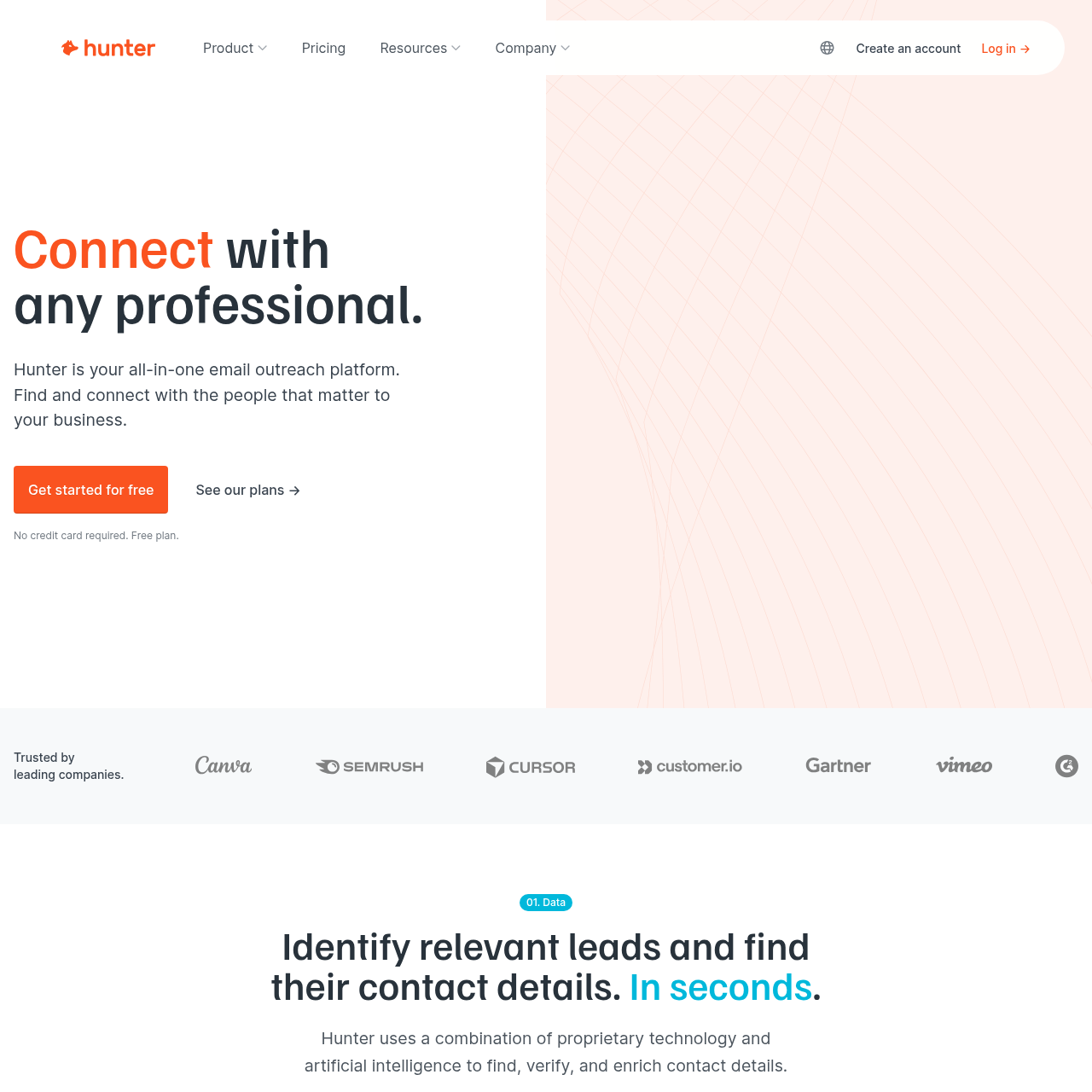
Some Woodpecker users discover their real bottleneck was sourcing contacts, not sending to them. Hunter.io ships a strong domain search and email finder with credit-based sequences attached. Starter at $49/mo buys 2K credits and 5 seats.

Credits are shared across find, verify, and send, the same shape as Snov, but the finder itself is more mature. Sequences here are weaker than Woodpecker's.

Hunter.io homepage
Source: Hunter.io

Strengths4

  • A strong domain search and finder
  • Intent signals on the higher tiers
  • Five seats included on Starter
  • A free 50-credit plan

Limitations4

  • A shared credit pool
  • Sequences less mature than Woodpecker's
  • No warmup at any tier
  • No dialer

PricingFree: 50 credits. Starter: $49/mo. Growth: $149/mo. Business: $499/mo.

Best forTeams whose Woodpecker workflow was "find, then send," and finding was the real work.

Sendbox vs Hunter.io: full comparison
5

GMass

Best for: staying inside Gmail entirely

GMass sits at the opposite end of the simplicity spectrum from Woodpecker: it lives inside Gmail itself. For solo founders or one-person outbound where the campaign really is just your inbox, it's the lightest-weight option in the category. Standard at $25/mo unlocks every feature.

The trade-off is Gmail's own sending limits, roughly 500/day personal, 2K/day Workspace, a hard ceiling Woodpecker doesn't impose.

GMass homepage
Source: GMass

Strengths4

  • Sends from your real Gmail address
  • A lower setup cost than Woodpecker's
  • No new interface to learn
  • A cheap entry tier

Limitations4

  • Gmail's sending limits cap your volume
  • No database
  • No dialer
  • Awkward to scale past a single inbox

PricingStandard: $25/mo. Premium: $35/mo. Professional: $65/mo.

Best forFounders who never needed Woodpecker's features and just want to send from Gmail.

Sendbox vs GMass: full comparison
6

PlusVibe

Best for: starting out on a genuine free tier

PlusVibe ships a free tier that's actually usable, 50 leads, unlimited warmup, which Woodpecker doesn't offer at all. AI personalization pulls from more than 80 enrichment sources, ahead of Woodpecker's native templating. Paid plans start at $69/mo.

For solo operators who wanted to test outbound without Woodpecker's minimum bill, this is the lowest-friction way in.

PlusVibe homepage
Source: PlusVibe

Strengths4

  • A free tier with 50 leads and unlimited warmup
  • AI personalization from 80+ sources
  • A cheaper paid entry than Woodpecker's volume tiers
  • Fast onboarding

Limitations4

  • A smaller company than Woodpecker's
  • A less mature roadmap
  • No dedicated IPs
  • No native dialer

PricingFree: 50 leads. Paid plans from $69/mo.

Best forOperators who want to validate outbound before paying anyone, Woodpecker included.

Sendbox vs PlusVibe: full comparison
7

Smartlead

Best for: a gradual ramp instead of a full platform commitment

Smartlead suits teams who want to step up from Woodpecker without committing to a full stack on day one. Basic at $39/mo covers sending; SmartProspect adds prospecting, SmartDialer adds calling, SmartInfra adds dedicated servers, SmartDelivery adds placement testing. Each piece can be switched on individually as specific Woodpecker gaps turn into actual pain points.

Smartlead homepage
Source: Smartlead

Strengths4

  • A $39/mo base plan
  • The ability to add capabilities one at a time
  • SmartInfra for optional dedicated servers
  • SmartDialer for calling

Limitations3

  • Add-ons stack the bill quickly
  • Shared infrastructure by default
  • Mailbox FUP limits (100/300/800)

PricingBasic: $39/mo. Pro: $94/mo. Custom: $174/mo.

Best forTeams who want a gradual exit from Woodpecker rather than a one-time leap.

Sendbox vs Smartlead: full comparison

Sources

faq

Got questions? We've got answers.

Pricing scales with contacted prospects each month. The $29/mo entry covers 500 contacts, but by the time real outbound is running (5K-10K contacts/mo), the bill is several times that starting price. Volume-priced tools like Saleshandy and Smartlead keep costs flat as contact count grows instead.

Ready to land in primary?

Get your own isolated Sendbox setup running and start sending inside 15 minutes.

Every plan includes a dedicated IP. Cancel whenever you want.