








How we picked these for budget cold-email switchers
- Whether the tool preserves the bundled-database value Saleshandy offers
- Real cost per 10K emails at a price tier you'd actually use
- A route to dedicated IPs or sender isolation that doesn't require an enterprise leap
- Whether the tool stays a single subscription rather than stacking add-ons
- Whether prospect caps (Saleshandy Starter caps at 2K) get in the way of the workflow
- Real numbers pulled from running the same campaign on the alternative
Why people switch from Saleshandy
The shared pool is the real ceiling
Every Saleshandy tier puts you on shared IPs alongside every other customer. Below 10K emails/mo, this rarely shows up in the numbers. Past 50K, the noise becomes visible in reply rates once you segment by ISP.
The 2K prospect cap on Starter feels arbitrary
The $25 Starter plan ships 2K prospects and 6K emails — fine for testing, not enough for a real campaign. The forced upgrade to Pro at $69/mo arrives sooner than the sticker price suggests.
No dialer, no LinkedIn, no SMS
Saleshandy is strictly an email tool. Once your sales process needs phone follow-up or LinkedIn outreach, you're paying for Saleshandy plus a second tool.
The 852M database is large but noisy outside the US
Database size is the number that gets marketed. Accuracy outside North America is uneven, and since the verifier draws from the same credit pool, heavy verification eats into your sending budget.
Quick Comparison
| Tool | Best For | Price | IPs | Dialer |
|---|---|---|---|---|
| Sendbox | Dedicated IPs plus a bundled toolset | Flat, unmetered pricing | ||
| GMass | Staying in Gmail, at a lower setup cost | $25/mo | ||
| Woodpecker | A cleaner interface at a similar price | $29/mo | ||
| Hunter.io | Finder-first, with stronger data tooling | $49/mo | ||
| Snov.io | A built-in CRM at a low price | $30/mo | ||
| Smartlead | A modular ramp, dedicated infra optional | $39/mo | ||
| Apollo.io | Data depth backed by intent signals | $49/user/mo |
Switch to Sendbox
Dedicated IPs. Isolated infrastructure. From $99/mo.
The 7 Best Saleshandy Alternatives
Best for: when shared IPs finally caught up with you
Sendbox is the upgrade for Saleshandy users who've hit the deliverability ceiling. Essential ships dedicated IPs on every plan, 75K emails, 30K leads, and a 350M-contact database. It costs noticeably more than Saleshandy Starter, but the infrastructure no longer moves with someone else's reputation.
For teams sending past 50K/mo, the math usually pays off within the first quarter.

Source: Sendbox
Strengths
- Dedicated IPs on every plan
- 350M+ contacts bundled in
- Dialer and CRM included
- 75K emails on Essential, with a published Fair Use policy
Limitations
- Costs considerably more than Saleshandy's $25/mo entry
- No mobile app
- A smaller database than Saleshandy's 852M
Pricing: Essential, Plus, Pro, and Agency — four flat tiers, priced with no metered add-ons.
Best for: Saleshandy users whose volume crossed 50K/mo and started noticing open rates shift.

GMass
Best for: dropping the standalone tool and staying inside Gmail
GMass is the deliberate downshift from Saleshandy: sends from your real Gmail account, priced at $25/mo Standard, with no separate dashboard, no database, and no warmup. For solo operators or one-person teams whose Saleshandy usage was already small, it cuts the platform overhead and lets you run outbound from a tool you already know.

Source: GMass
Strengths
- Sends from your real Gmail address
- Priced the same as Saleshandy
- No new interface to learn
- No vendor FUP — Gmail's own daily caps apply instead
Limitations
- Gmail's limits (~500/day personal, ~2K/day Workspace)
- No native database
- No multichannel
- Awkward once you try to scale
Pricing: Standard: $25/mo. Premium: $35/mo. Professional: $65/mo.
Best for: Solo founders who realized they didn't actually need Saleshandy's platform features.
Woodpecker
Best for: a cleaner interface at roughly the same price
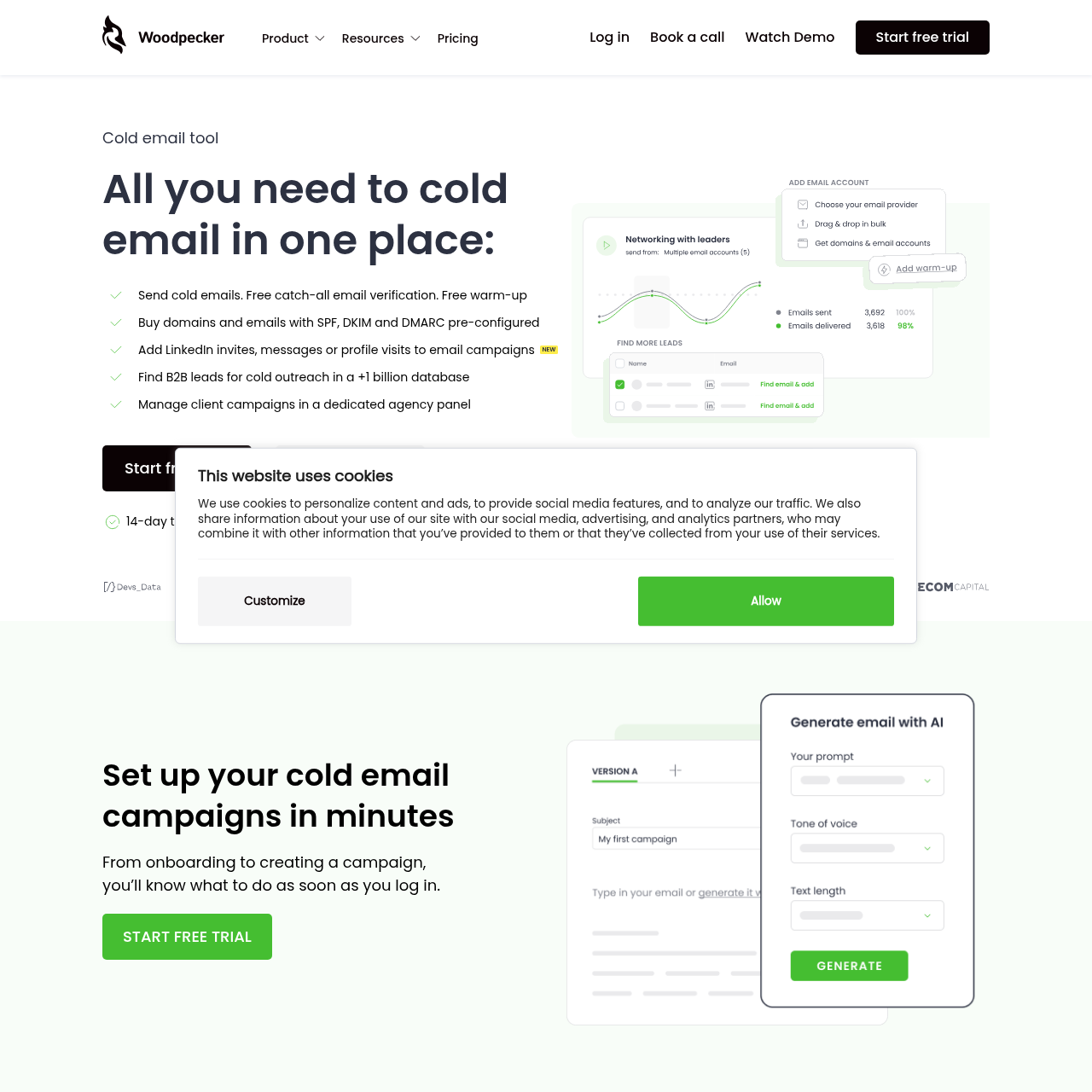
Woodpecker is the "same class of tool, better polish" swap. Entry pricing sits close to Saleshandy's and is contact-priced rather than per-mailbox. The platform is older and noticeably more refined in the UX department than Saleshandy, though it skips a native database and a dialer.
Worth a look if your real complaint about Saleshandy is simply that it feels rough around the edges.

Source: Woodpecker
Strengths
- Entry pricing close to Saleshandy's
- A cleaner interface and onboarding flow
- Conservative sending defaults
- A long-established product
Limitations
- No database, where Saleshandy bundles one
- No dialer
- Contact-priced billing that scales as you succeed
Pricing: From $29/mo. Scales with contacted prospects per month.
Best for: Saleshandy users who never actually used the bundled database anyway.
Switch to Sendbox
Dedicated IPs. Isolated infrastructure. From $99/mo.
Hunter.io
Best for: turning the finder into the main job
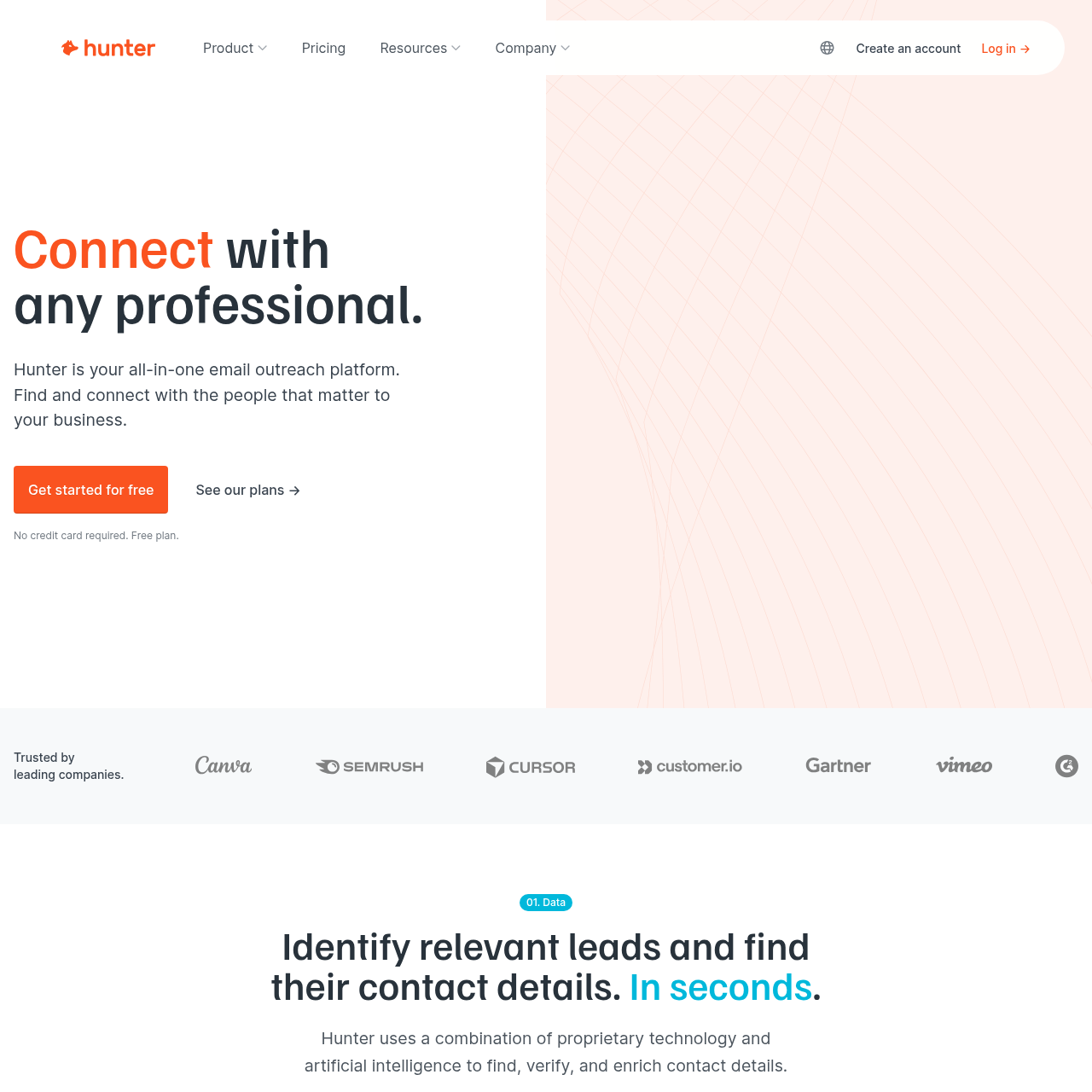
Hunter.io is a credit-based finder with sequences attached. Starter at $49/mo ships 2K credits and 5 seats — pricier than Saleshandy Starter, but the finder itself is more mature and the intent signals available from Growth up aren't something Saleshandy offers at all. For teams whose Saleshandy use skewed more toward finding than sending, a finder-first tool is the right call.

Source: Hunter.io
Strengths
- A more mature finder than Saleshandy's
- Intent signals from Growth up
- Five seats included on Starter
- A free 50-credit tier
Limitations
- A less mature sequencer than Saleshandy's
- A shared credit pool
- No warmup
- No dialer
Pricing: Free: 50 credits. Starter: $49/mo. Growth: $149/mo. Business: $499/mo.
Best for: Teams whose Saleshandy bill was mostly justified by the finder alone.
Snov.io
Best for: getting a CRM Saleshandy never gave you
Snov.io is the close cousin with an actual CRM built in. Starter at $30/mo ships a finder, verifier, sequencer, and a real CRM. Saleshandy has CRM-like features, but it treats contacts as campaign entities, where Snov treats them as deals.
The database is a smaller 50M, and it carries the same shared credit-pool trade-off Saleshandy has.

Source: Snov.io
Strengths
- A built-in CRM with pipeline stages
- An entry price close to Saleshandy's
- Warmup on Pro 5K
- A free tier available
Limitations
- A smaller 50M database
- A shared credit pool
- No dedicated IPs
- Email only
Pricing: Free: $0/mo. Starter: $30/mo. Pro 5K: $75/mo.
Best for: Solo operators who want pipeline tracking, not just a list of past campaigns.
Smartlead
Best for: a path to dedicated infra without leaving the budget tier
Smartlead's modular structure — SmartInfra, SmartDialer, SmartProspect — is the most flexible upgrade path here. Basic at $39/mo covers sending, and you add capabilities à la carte as Saleshandy's gaps turn into concrete problems. SmartInfra is the only mid-priced route to dedicated servers in this category.

Source: Smartlead
Strengths
- A $39/mo base plan
- SmartInfra for optional dedicated servers
- SmartDialer for calling
- A mobile app
Limitations
- Add-ons stack the bill
- Mailbox FUP limits (100/300/800)
- No native database on the base plan
Pricing: Basic: $39/mo. Pro: $94/mo. Custom: $174/mo.
Best for: Saleshandy users who want optional upgrades rather than a full re-platform.
Apollo.io
Best for: trading database size for database quality
Apollo Basic at $49/user/mo ships 275M contacts backed by intent signals and buying-stage data — smaller than Saleshandy's 852M, but better targeted. The free plan alone beats what Saleshandy Starter offers on data. Per-seat pricing is the catch, and the sequencer is weaker than Saleshandy's.

Source: Apollo.io
Strengths
- 275M contacts backed by intent signals
- Buying-stage data
- A genuinely generous free plan
- CRM-grade integrations
Limitations
- Per-seat pricing
- A weaker sequencer than Saleshandy's
- A smaller raw database
- No dedicated IPs
Pricing: Free plan. Basic: $49/user/mo. Pro: $79/user/mo. Organization: $119/user/mo.
Best for: SDR teams whose Saleshandy bounce rates ran higher than expected.
Keep reading
Got questions? We've got answers.
Still stuck? Talk to us →Below 10K emails/mo, the noise usually falls within normal day-to-day variation. Past 50K/mo, you can typically see reply rates drift when segmented by ISP in ways that track with pool activity. If weekly metrics swing more than 30% with no campaign changes to explain it, the shared pool is the likely culprit.
Ready to land in primary?
Get your own isolated Sendbox setup running and start sending inside 15 minutes.
Every plan includes a dedicated IP. Cancel whenever you want.